The hosting landscape has shifted from static pages to dynamic, scalable applications. Today’s sites expect speed, reliability, and security at scale. Cloud services, containerization, and edge computing redefine what hosting can deliver.
As technology advances, deployments need to be seamless, recovery automatic, and management intuitive. This trend drives demand for platforms that adapt in real time without disrupting users.

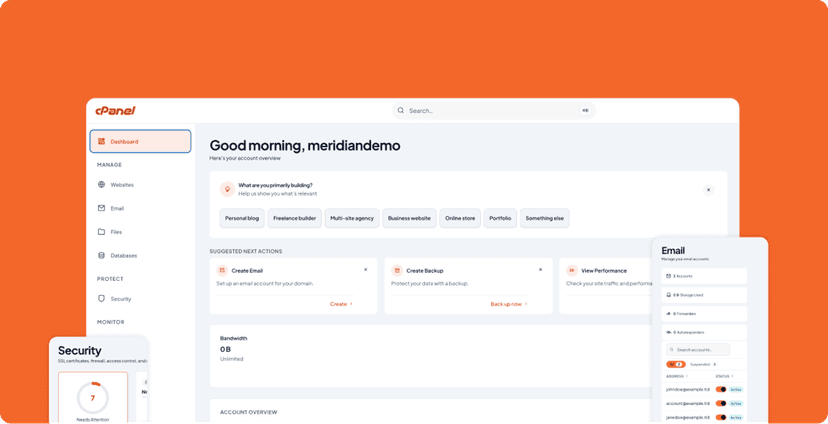
AI moves beyond automation to intent driven operations. It supports smarter resource allocation, real time threat detection, and proactive maintenance inside a familiar control panel. The result is faster deployments, fewer manual tasks, and higher uptime.
For providers like Stable Cluster, AI translates to tangible gains: consistent performance, stronger security, and a more predictable hosting experience for Nepali customers. In practice, you can expect maintenance windows to shrink and fewer manual interventions during peak traffic.
What readers can expect in this article
- How AI driven resource management and predictive autoscaling improve performance and cost efficiency, with real world numbers and scenarios.
- Real time security improvements powered by AI, including anomaly detection and rapid incident response workflows.
- Self healing infrastructure and automated maintenance concepts, illustrated with concrete rollout steps.
- AI enhanced website management within cPanel and streamlined workflow improvements, plus practical implementation tips.
AI analyzes historical patterns, current requests, and health signals to forecast near-term demand. This supports proactive resource adjustments before congestion arises.

Predictive autoscaling shifts compute capacity across CPU, memory, and I/O based on expected load. The outcome is steadier response times and more efficient hardware use.
- Dynamic scaling across web and database layers
- Fine grained controls to prevent overprovisioning and reduce waste
- Maintained performance during traffic spikes with minimal manual intervention
In Nepal, network variability can affect performance. AI-driven resource management helps by routing workloads to optimal nodes and adjusting caching strategies in real time.
Costs decrease as resources scale precisely to demand, reducing wasted capacity and energy use while preserving service quality.
| aspect |
traditional autoscaling |
AI-driven autoscaling |
| Forecast accuracy |
Reactive |
Proactive |
| Resource utilization |
Moderate waste |
Optimized |
| Response to spikes |
Delayed |
Preemptive |
AI analyzes traffic patterns, user behavior, and system signals in real time to identify deviations from normal activity. Early warnings support quicker containment and reduce unnecessary traffic across the network.
When anomalies are detected, automated responses can isolate affected components, adjust firewall rules, and trigger guided remediation workflows. This approach shortens dwell time for threats and minimizes manual triage.
AI-enabled systems monitor patterns associated with brute force attempts, SQL injection, and cross-site scripting to adapt defenses on the fly. Shared hosting environments gain adaptive isolation and targeted rules that protect adjacent sites.
- Adaptive rate limiting to deter automated abuse
- Behavior analytics for signature-less detection
- Automated patch prompts for known vulnerable components
| Aspect |
Traditional |
AI-Enhanced |
| Detection speed |
Manual or rule-based |
Real-time, pattern-based |
| Anomaly handling |
Reactive |
Proactive containment |
| Threat coverage |
Static rules |
Adaptive to evolving threats |
3. Self-Healing Infrastructure and Automated Maintenance
cPanel AI continuously assesses server health across metrics such as resource utilization, service status, and dependency health. This enables early detection of signs that a component may fail.
Automated failover planning maps out alternate paths before a problem occurs, ensuring quick rerouting of traffic and services with minimal impact to users.
When issues arise, AI-driven remediation executes predefined playbooks, isolating faulty elements and restoring normal operations without human intervention.
- End-to-end health monitoring across web, app, and database layers
- Prebuilt remediation workflows tailored to common hosting stacks
- Automated health checks run at regular intervals for continuous assurance
Proactive resolutions rely on predictive signals from workload, environment, and application signals to prevent outages before they start.
This approach minimizes MTTR by triggering rapid, automated responses that maintain service levels even during unexpected stress events.
| Aspect |
Reactive |
Self-Healing AI |
| Diagnosis speed |
Manual or delayed |
Instant and autonomous |
| Downtime duration |
Longer during incidents |
Significantly reduced |
| Recovery approach |
Human-driven recovery |
Automated remediation |
cPanel AI identifies where issues originate within common workflows and suggests targeted fixes. It can apply safe remediation steps automatically when appropriate.
This leads to quicker problem resolution with less digging, thanks to guidance aligned to your hosting setup.
The platform guides you through setup and maintenance with prompts tailored to your stack. Predictive diagnostics flag misconfigurations before they affect visitors.
This reduces guesswork and speeds up onboarding for new apps or updates.
- Automated app deployments with sensible defaults
- Smart file and database management suggestions
- Contextual learning that evolves with your environment
- Self-service diagnostics that minimize dependency on support
| Aspect |
Traditional |
AI-Enhanced |
| Troubleshooting speed |
Manual and reactive |
Contextual, faster |
| Workflow guidance |
Discrete steps |
Guided with adaptive prompts |
| Diagnostics |
Static checks |
Predictive and proactive |
cPanel AI optimizes backup timing based on usage patterns and change frequency, balancing redundancy with storage costs. It learns the ideal cadence for full and incremental backups across websites, databases, and configurations.
Integrity monitoring runs continuously, verifying backup consistency and detecting tampering or corruption in near real time. Automated verification ensures recoverability without manual intervention.
- Adaptive backup windows to minimize performance impact
- Automated integrity checks and restoration tests
- Incremental backups for rapid recovery
AI-driven controls enforce data handling rules aligned with regional and industry requirements. This includes access governance, encryption at rest, and audit-ready activity logs.
Automated policy enforcement reduces the risk of misconfiguration, helping hosting environments stay compliant with standards relevant to WordPress, Node.js stacks, and general web workloads.
| Aspect |
Traditional |
AI-Driven |
| Backup scheduling |
Fixed intervals |
Dynamic, usage-aware |
| Integrity checks |
Periodic verification |
Continuous verification and auto-test |
| Compliance enforcement |
Manual policy review |
Automated policy enforcement |
AI informs cache strategies across dynamic workloads by analyzing access patterns and adjusting cache lifetimes to balance latency with resource use.

CDN orchestration becomes proactive, steering content closer to users based on real-time signals and edge availability. Server-side tuning is automatically adjusted to improve response times during peak periods.
- Adaptive cache policies that balance speed and freshness
- Dynamic edge routing to minimize travel distance
- Automated tuning of PHP, Node.js, and other runtimes for peak performance
Edge delivery gains benefit Nepal and nearby regions where network variability can affect user experience. Local edge nodes reduce round-trip times and improve stability during regional outages.
AI-driven routing accounts for last-mile conditions, delivering faster content to both rural and urban users. This complements existing infrastructure with smarter edge placement.
| Aspect |
Traditional |
AI-Enhanced |
| Caching |
Fixed policies |
Dynamic, usage-aware |
| CDN routing |
Static or reactive |
Predictive and adaptive |
| Server-side tuning |
Manual adjustments |
Automated optimization |
Adopting AI features can introduce a learning curve for teams used to traditional workflows. Some users may experience initial configuration overhead as systems adapt to predictive prompts and guided workflows.
AI components rely on data quality and availability. Inconsistent data can impact accuracy of recommendations or automations, requiring ongoing governance and monitoring.
Expect broader use of AI driven automation across provisioning, security, and performance tuning. Multi cloud and edge deployments will grow, enabling closer proximity to users and improved reliability.
- Predictive resource management and auto scaling
- AI assisted security posture and threat detection
- Serverless and containerized hosting models
- Green hosting with energy aware optimization
Multiple providers leverage cPanel as a core control panel within their hosting stacks. These providers integrate AI assisted features to streamline management, deployments, and support workflows.
- Managed hosting firms that offer WordPress and Node.js stacks
- Resellers seeking scalable, consistent tooling
- Cloud-based hosting platforms expanding traditional control panels
AI has shifted hosting from reactive maintenance to proactive optimization. It enables smarter resource use, stronger security, and faster issue resolution across diverse workloads.
With AI, platforms can anticipate needs, adapt in real time, and simplify complex tasks for users at every skill level.
- Scale AI across core services while preserving local support and data sovereignty
- Integrate AI-assisted backups, monitoring, and automated restorations for near-zero downtime
- Enhance WordPress and Node.js hosting with intelligent deployment and optimization
- Leverage edge-ready infrastructure to improve performance for regional users
- Maintain transparent governance with audit trails and strict security controls
| Focus Area |
What It Delivers |
| Resource management |
Predictive autoscaling and efficiency |
| Security |
Real-time threat detection and automated remediation |
| Management experience |
Guided workflows and self-service assistance |